








How to Monitor Your Child’s Oxygen Levels When Flu and RSV Hits

The content provided on this blog is intended for informational and educational purposes only. It is not a substitute for professional medical advice, diagnosis, or treatment. Always seek the advice of a qualified healthcare provider with any questions you may have and to learn more about your child's specific needs.
Influenza (flu) can turn a routine cold into a stressful night, especially for infants. If you’re wondering how to monitor oxygen levels and pulse rate at home during flu season, the essentials are straightforward: watch your child’s breathing, use an FDA-cleared pulse oximeter, and notice changes you may want to discuss with your pediatrician. Oxygen saturation (SpO2) provides a quick picture of how well your child is oxygenating; pulse rate helps you understand their physiological stress. Below, we explain when and how to check, which devices fit tiny patients best, and how to interpret what you see, grounded in clinical guidance and designed to give you more peace of mind.
Understanding Flu and RSV and Its Impact on Your Child’s Breathing
Influenza (flu) is a common respiratory virus that infects the lungs and airways in children. Early flu symptoms can look like a cold (runny nose, cough, fever) but swelling and mucus in the small airways may progress to wheezing, rapid breathing, and signs of respiratory distress. This can lead to hypoxia in infants, meaning their tissues aren’t getting enough oxygen even before obvious blue discoloration appears. Like RSV, flu can be particularly concerning in infants and young children. (Source: Mayo Clinic’s overview of RSV and Cleveland Clinic on RSV in children)
Because flu-related breathing challenges can worsen quickly in some children, at-home observation matters. Tracking symptoms alongside the tracking of oxygen levels and pulse rate may help you detect changes sooner and communicate precisely with your clinician.
What to watch for:
-
Faster breathing than usual, persistent cough, or wheezing
-
Increased work of breathing: chest retractions, nasal flaring, grunting
-
Poor feeding, fewer wet diapers, or vomiting with coughing
-
Lethargy, unusual sleepiness, or irritability
-
Color changes (pale, gray, blue lips/skin), pauses in breathing
-
Fever that doesn’t respond to comfort measures
If you see these symptoms and you're concerned, you may choose to check oxygen and pulse rate and contact your clinician. (Source: Nurse.com clinical guide to RSV)
What to know about hypoxia:
-
Hypoxia means low oxygen in the body’s tissues. In infants, it may show up as restlessness, feeding difficulty, or subtle color changes before obvious distress.
-
One reading is less important than a clear trend. Recheck after calming, warming hands/feet, and ensuring good sensor placement.
Practical home-monitoring advice:
-
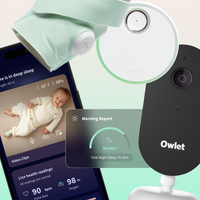
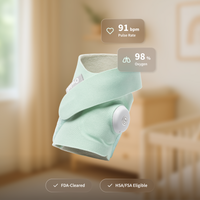
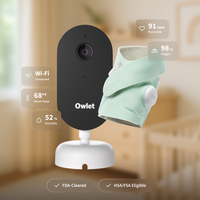
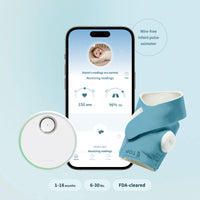
With the Owlet Dream Sock® smart baby monitor, real-time tracking of pulse rate and oxygen level is in the palm of your hand. This can provide added visibility at home, alongside what you're observing.
-
If your baby has certain underlying medical needs, prescription BabySat® may be a helpful part of their care. Learn more about whether BabySat is right for your family here.
When to seek care immediately:
-
Struggling to breathe, pauses in breathing, bluish lips/face, signs of dehydration
-
Worrisome oxygen trends (repeatedly low readings at rest or falling numbers) alongside clinical symptoms of flu. Call your clinician or go to urgent/emergency care as instructed. (Source: Cleveland Clinic on RSV in children)
Choosing the Right Monitoring Device for Your Child
A pulse oximeter measures SpO2 (peripheral capillary oxygen saturation) using light to measure how much oxygen is carried in the blood, and it also reports pulse rate.
What the terms mean:
-
Pulse oximeter: a noninvasive sensor that estimates oxygen saturation and pulse rate.
-
SpO2: an estimate of blood oxygen saturation; typical healthy values at sea level are generally in the mid- to high-90s, but your clinician will set thresholds for your child’s situation.
-
Photoplethysmography (PPG): the light-based method used by pulse oximeters. Many infant wearables use transmittance PPG with red/infrared light to capture signals through the foot.
Accuracy and safety tips:
-
For infants, choose an FDA-cleared pulse oximetry device with medical-grade accuracy for home use. Owlet Dream Sock is the only FDA-cleared baby monitor of its kind on the market.
-
Look for features that improve reliability in real-life: secure infant sizing, motion-resistant algorithms, and clear alerts.
How to get a reliable reading at home:
-
Check when your child is calm or sleeping.
-
Ensure the correct size and snug placement.
-
If needed, warm cold feet for 1–2 minutes.
-
Pair numbers with the clinical picture. Pulse rate naturally rises with fever; track changes alongside breathing and comfort.
Data privacy and care coordination:
-
Use devices that store data securely and allow you to share trends with your clinician. Some families choose devices that make it easy to share readings and trends with their clinician.
Bottom line: Choose an infant-centric, FDA-cleared pulse oximeter designed for babies, and use trend readings alongside observable signs (such as breathing, comfort, feeding). If you're concerned, share trends with your pediatrician so you can decide the best next step together.
Dream Sock is intended to track baby's pulse rate and oxygen level and keep parents informed. Dream Sock is not intended to diagnose, treat or cure any disease or other condition, including but not limited to, Sudden Infant Death Syndrome (SIDS) and/or Respiratory Syncytial Virus (RSV). Medical decisions should never be made solely using Dream Sock data. Dream Sock should not substitute for the care and oversight of an adult or consultation with medical professionals.
BabySat is an FDA-cleared prescription only device, available in the U.S. only. BabySat pulse oximeter is indicated for use in measuring and displaying functional oxygen saturation of arterial hemoglobin (SpO2) and Pulse rate. It is indicated for spot-checking and/or continuous monitoring of well-perfused patients greater than one month old up to 18 months old and weighing between 6 and 30 lbs., in the home environment, and should be used in consultation with medical professionals. Medical decisions should not be made solely based on BabySat data.


