








9 Essential Steps to Help Treat Your Baby’s Flu

The content provided on this blog is intended for informational and educational purposes only. It is not a substitute for professional medical advice, diagnosis, or treatment. Always seek the advice of a qualified healthcare provider with any questions you may have and to learn more about your child's specific needs.
When your baby has the flu, you want clear steps you can trust. Start with the basics: keep them hydrated, control fever for comfort, relieve congestion, and closely watch breathing. If your baby is under 3 months or shows any warning signs, such as high fever, trouble breathing, poor feeding, unusual sleepiness, call your pediatrician right away. Having objective readings at home can help you stay oriented and share clearer information with your pediatrician. Owlet’s FDA-cleared Dream Sock® offers real-time pulse and oxygen insights that can provide added visibility alongside symptoms and pediatrician guidance to help inform professional care. Below, we outline eight steps for how to treat a baby with the flu, plus how monitoring tools with medical-grade accuracy can add visibility at home.
Owlet Dream Sock
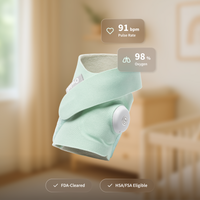
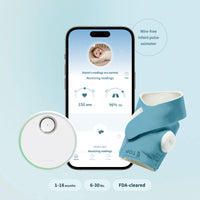
FDA-cleared Dream Sock is the first smart baby monitor of its kind to use pulse oximetry with medical-grade accuracy to track pulse rate and oxygen levels in real time. This information can offer important context if you notice changes in breathing. Pulse oximetry is a noninvasive way to measure blood oxygen saturation and pulse rate, helping caregivers to potentially notice changes in oxygen readings you may want to discuss with your pediatrician. The device is comfort-engineered for all skin tones (Type I-VI on the Fitzpatrick scale) and designed for nightly use, supporting continuous tracking across sleep and naps.
Clinical validation means a device’s measurements have been tested against a clinical standard to demonstrate accuracy for the intended use; FDA clearance reflects this level of evidence. Dream Sock is accurate within +/- 3% of arterial blood gas measurements.*
Dream Sock Feature Overview
|
Feature |
Why it matters for flu care |
|
Real-time oxygen and pulse rate tracking |
Provides timely alerts if pulse rate or oxygen levels leave preset ranges |
|
FDA clearance for infant monitoring |
Signals clinical validation and safe, intended use for babies between 1-18 months |
|
Comfort fit, tested across skin tones |
Supports reliable readings and monitoring during naps or nighttime |
1. Contact a Pediatrician Immediately
Call your pediatrician promptly if your baby has a high fever, fast or labored breathing, poor feeding, signs of dehydration (fewer wet diapers), or decreased responsiveness. Share your observations along with objective health data, such as recent temperatures, pulse rate, and oxygen saturation, to provide a clear snapshot of stability or change. Vital signs are core health markers (pulse rate, oxygen saturation, temperature) that help determine whether an illness is stable or worsening. Antibiotics don’t treat the flu; your clinician may consider antivirals early in the illness for high-risk infants. If severe breathing difficulty, bluish lips/face, or unresponsiveness occurs, seek emergency care immediately.
2. Monitor Breathing and Oxygen Levels
When the flu affects the airways, respiratory status can change quickly. Watch your baby’s breathing rate and effort, and look for color changes.
What to watch
-
Fast, shallow breathing, or working hard to breathe (nasal flaring, chest retractions, grunting)
-
Pauses in breathing or unusually noisy breathing
-
Pale, gray, or bluish lips or face
How to respond
-
Keep your baby calm and upright on your shoulder to ease their breathing
-
Use saline and suction to clear the nose before feeds and sleep
-
If you see warning signs (above), contact your pediatrician or seek urgent care
How technology can help
-
Dream Sock can alert you to changes in oxygen saturation and pulse in real-time, prompting you to check on your baby and, if concerned, contact your pediatrician.
3. Track Fever and Keep Baby Comfortable
Regular temperature checks help you track patterns and treatment response. Keep your baby hydrated with frequent breastmilk/formula; offer smaller, more frequent feeds if needed. Dress them in lightweight layers and keep the room comfortably cool.
With your pediatrician’s guidance, you may use antipyretics to reduce fever and improve comfort. Antipyretics are fever-reducing medications such as acetaminophen (and ibuprofen for babies over 6 months); always dose by weight and follow your clinician’s instructions. Document temperatures and timing in your app so you can review trends at appointments. Avoid over-the-counter cold and cough medicines in infants unless your pediatrician specifically recommends them.
4. Use Nasal Suction and Saline Drops
Congestion makes feeding and sleep harder when your baby has the flu.
Quick congestion relief
-
Saline first: Place 2–3 drops of sterile saline in each nostril to loosen mucus
-
Gentle suction: Use a bulb syringe or nasal aspirator to clear each nostril
-
Best timing: Before feeds and bedtime, and as needed during the day
-
Clean-up: Rinse and air-dry your suction device after each use; replace when worn
-
Safe sleep: Always place your baby on their back in a clear crib, even during illness
5. Use Owlet Dream Duo for More Comprehensive Monitoring
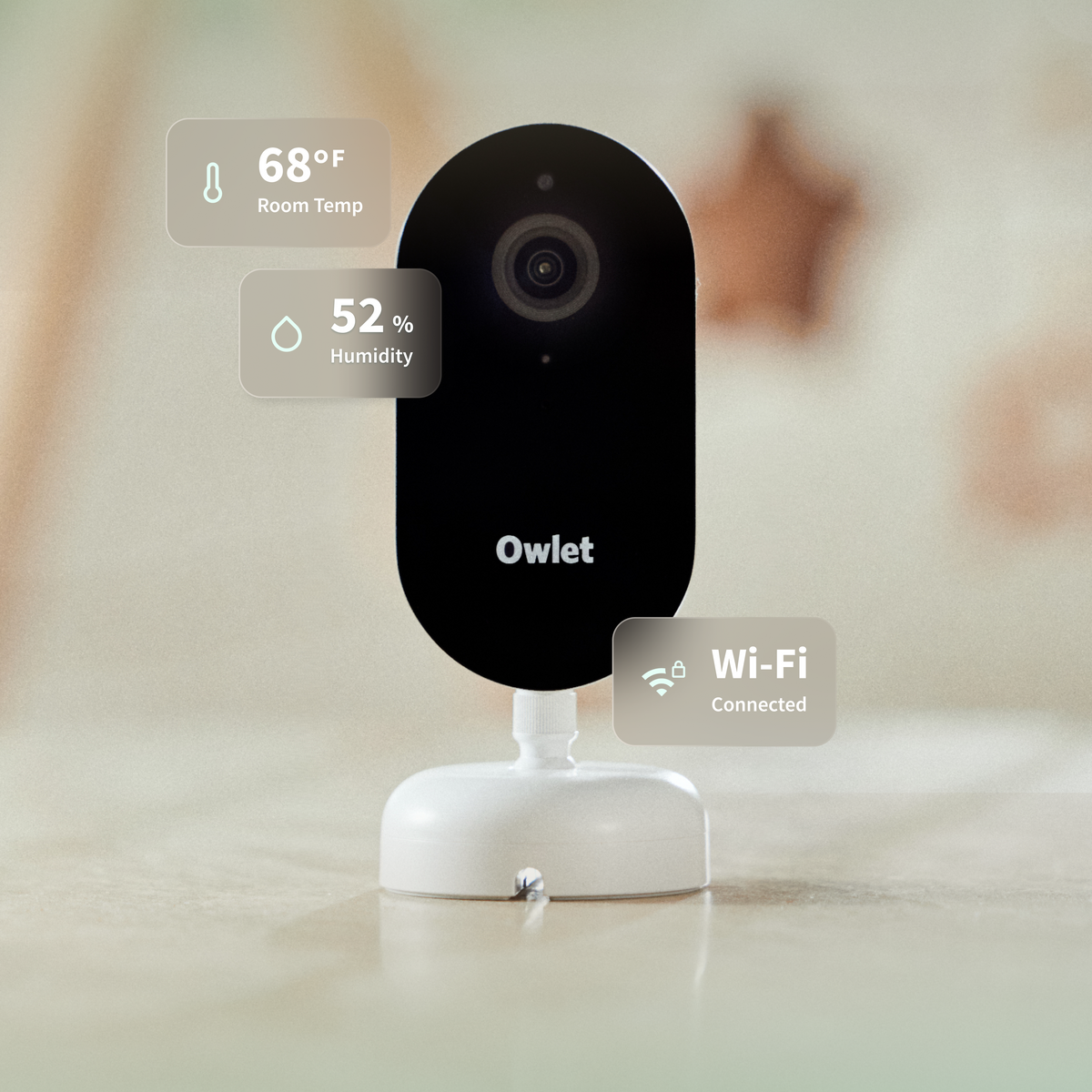
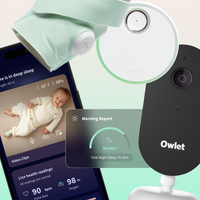
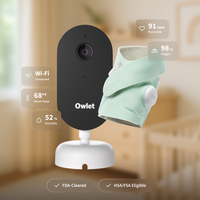
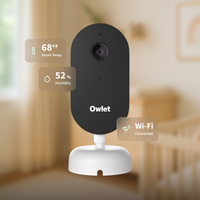
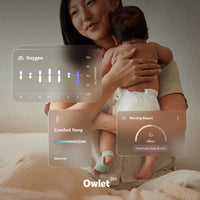
Pairing vital sign monitoring with live video gives a more complete picture during illness. Dream Duo™ combines the pulse/oxygen data from Dream Sock with the Dream Sight™ camera’s HD video and audio in one view, allowing easier monitoring and check-ins by caregivers through the Owlet Dream App.
At-a-glance comparison
|
Product |
What It Tracks |
How It May Help During Flu |
|
Dream Sock |
Live pulse rate, oxygen saturation |
Alerts to changes within the preset zones that may be a reason to check in/discuss with your pediatrician |
|
Dream Sight |
2K HD video, sound, crying, motion, room temperature, humidity |
See baby clearly, monitor sleep position, and environmental conditions |
|
Dream Duo (includes Dream Sock + Dream Sight) |
Live pulse rate, oxygen saturation + video |
Alerts to changes within the preset zones + see baby clearly |
6. Understand Device Limitations and Alerts
Smart monitors enhance awareness, but they don’t diagnose, treat, or replace clinical evaluation. If your baby looks unwell or shows warning signs, act on what you see and contact a clinician, even if readings seem normal.
Know before you use
-
Check fit each night; reposition if readings seem inconsistent
-
Keep devices charged and Wi-Fi stable; plan for travel or outages
-
Treat alerts as prompts to check your baby, not as diagnoses
7. Interpret Health Trends Over Time
One data point rarely tells the whole story. Look for changes across hours and days, such as steadily improving oxygen stability, easing pulse rate during sleep, shorter fevers, better feeds, to gauge recovery. Objective trend data can reduce guesswork and support clearer care decisions.
For deeper insights, the optional Owlet360™ membership provides personalized trend reports, daily summaries, and sleep position tracking, with a 7-day free trial available in the Owlet Dream App.
8. Prepare Documentation for Follow-Up Care
Arrive prepared so your pediatrician can act quickly.
-
List observations: Note feeding amounts, diapers, medications, and behavior changes
-
Capture key data: Save temperature logs, notable pulse/oxygen readings, and timestamps
-
Include visuals: Save short video clips that show breathing effort or cough quality
-
Organize by date: Create a simple timeline of symptoms and any alerts
-
Share efficiently: Export or screenshot app summaries to bring or send ahead
9. Consider BabySat for Babies with Underlying Conditions
If your baby has certain medical needs, BabySat® may be a helpful part of their at-home monitoring plan under a physician's care.. Some examples of conditions a healthcare provider may consider include:
-
Chronic lung disease of prematurity
-
Apnea of prematurity
-
Dependence on supplemental oxygen
-
Congenital heart conditions such as hypoplastic left heart syndrome or single-ventricle physiology
-
Reactive airway disease
-
Heart rhythm conditions like supraventricular tachycardia (SVT)
-
Neuromuscular disorders, including spinal muscular atrophy
This isn’t a complete list, but it highlights some of the situations where BabySat is commonly prescribed. If your baby has one of these conditions or something similar, it may be worth talking with your healthcare provider about whether BabySat is right for your family.
You can ask your provider for a prescription, and we’ve put together a few helpful tips to guide you through that conversation.
Already have a prescription? You can get started with your BabySat order right away through our partner, AdaptHealth. Just click here to begin.
Frequently Asked Questions
What medications are safe for babies with the flu?
Acetaminophen (and ibuprofen for babies over 6 months) can reduce fever and improve comfort; never give aspirin. Always dose by weight and follow your pediatrician’s guidance.
When should antiviral medication be started for a baby?
If your pediatrician diagnoses your baby with (or strongly suspects) the flu, ask about antivirals right away. They work best within 48 hours of symptoms, but may still be recommended later, especially for babies and children at higher risk or with severe/progressive illness.
How can I help relieve my baby's congestion and cough?
Use saline drops and suction to gently clear the nose, especially before feeds and sleep. Avoid over-the-counter cough/cold medicines unless your doctor recommends them.
Why is hydration important during the flu?
Fluids help prevent dehydration and thin mucus, making breathing and feeding easier while your baby recovers.
When should I seek emergency care for my baby?
Seek urgent/emergency care for breathing difficulty, bluish lips/face, signs of dehydration, persistent high fever not responding to medication, or unusual sleepiness or unresponsiveness.
Dream Sock is intended to track baby's pulse rate and oxygen level and keep parents informed. Dream Sock is not intended to diagnose, treat or cure any disease or other condition, including but not limited to, Sudden Infant Death Syndrome (SIDS) and/or Respiratory Syncytial Virus (RSV). Medical decisions should never be made solely using Dream Sock data. Dream Sock should not substitute for the care and oversight of an adult or consultation with medical professionals.
BabySat is an FDA-cleared prescription only device, available in the U.S. only. BabySat pulse oximeter is indicated for use in measuring and displaying functional oxygen saturation of arterial hemoglobin (SpO2) and Pulse rate. It is indicated for spot-checking and/or continuous monitoring of well-perfused patients greater than one month old up to 18 months old and weighing between 6 and 30 lbs., in the home environment, and should be used in consultation with medical professionals. Medical decisions should not be made solely based on BabySat data.
*Accuracy of Dream Sock was tested in 18 adult subjects in a hypoxia lab setting. Readings were collected and compared to arterial blood gas measurements of oxygen across a range between 70-100%. A motion simulation protocol was also applied to determine accuracy during motion conditions. Mean ARMS of Dream Sock vs. blood gas measurements were 2.47% during non-motion conditions, and 2.97% during motion conditions. Both of these measurements meet ISO standards, which set the international metrics for pulse oximeter accuracy.


